Today there is a growing interest in traditional Rosicrucianism. Yet accessing older Rosicrucian rites and teachings is difficult. Having them grounds us on our path.
Without doubt we live in a time when the struggles and perils of our daily life requires a haven, where peace of mind can be provided. Many groups today practice their own Rosicrucian rituals dating from the early 20th century, a time when many new Rosicrucian Fraternities arose in the wake of Madame Blavatsky’s Theosophical Society. New Rosicrucian Orders continue to rise, each claiming to be the “most authentic and traditional.” Despite the claims, many have proven to be found wanting.
One 18th century group may be the answer to those seeking a traditional form of Rosicrucianism. It represents the oldest form of known Rosicrucian ritual workings.
Enter Mund, the Cabbalist, Rosicrucian, and Alchemist, who had a deep faith in Christ. He drafted the very first Rosicrucian Rite of Freemasonry no less, which planted the spark of the deity, within the neophyte himself.
It was during COVID lockdowns and, due to a lack of alternatives, I found myself diving into the Kloss digital archive. There, I found a lodge in Frankfurt, with strange rituals and completely unknown. My interest was piqued! Mund’s handwritten notes were not in great condition, but this was a labor of love and extrapolating the rituals from his handwriting begged to be done in the face of today’s new Rosicrucian revival. Not only that today’s Masonic community is buzzing with life and curiosity.
Very quickly I realized that Mund was a keen Freemason, but he was so much more.
Mund was an alchemist, protestant and painter, and was extremely well versed in history, alchemy, theosophy and alchemy. Looking at his complete ritual system, it is all the more remarkable that he lacked a formal education.
While his rituals were very close to traditional Freemasonry, there are remarkable peculiarities. While masonic degree work usually requires a temple, Mund starts his First degree in the profane World. At this first degree of the system one stands with the Levites and the Bearers of Burdens. It is called Chemuel Binea Thebina, while the name of the neophyte is ISCH SABAEL.
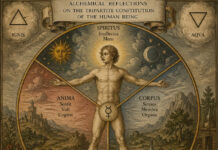
Plates from the Mund System:

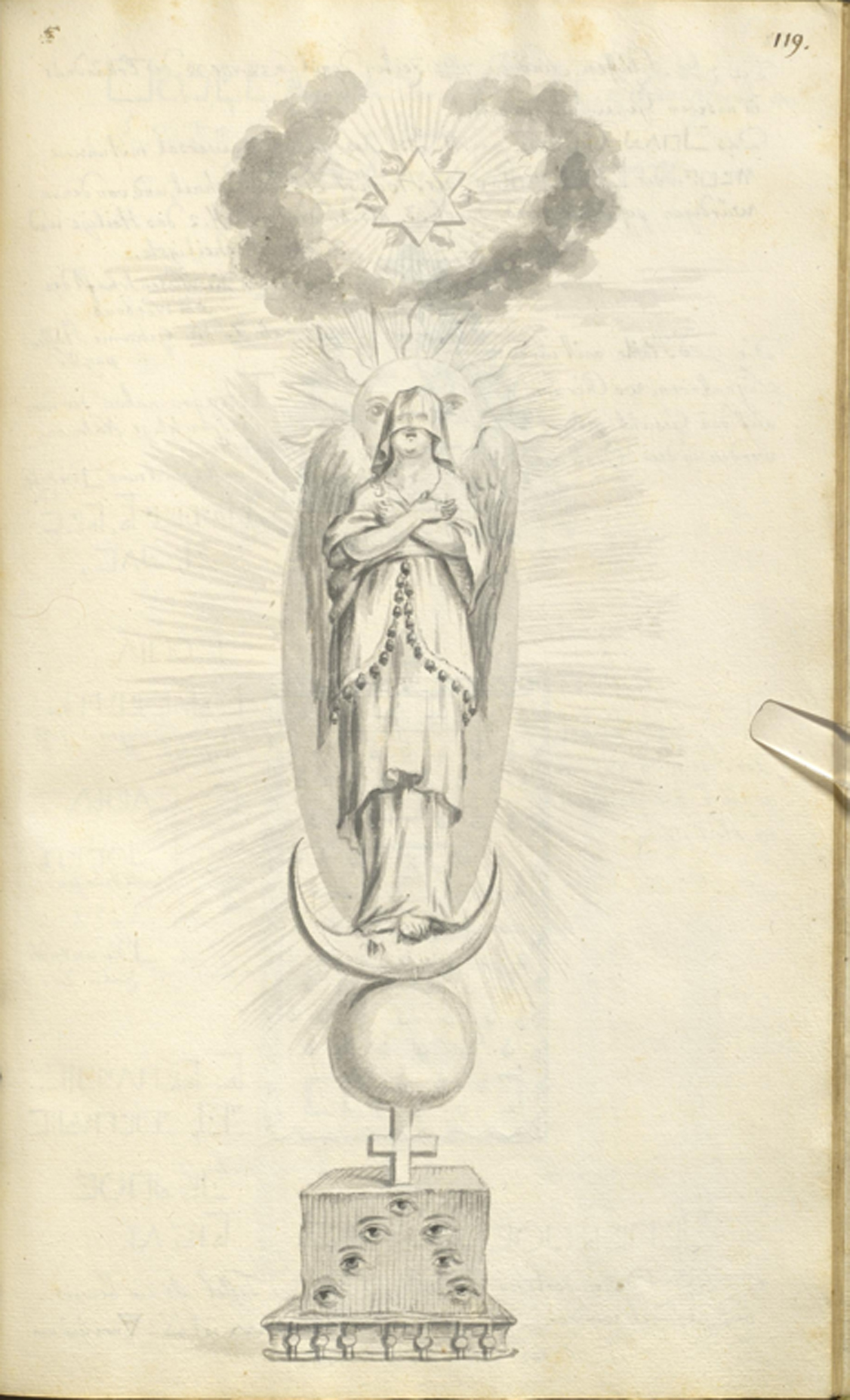
This first degree is a kind of nursery (of the horticultural sense). The candidate is accepted without ritual in the strict Masonic sense and is assigned to a Master for basic training.
At this level the Adept must learn to recognise the effect of the forces of nature and acquire that ability to separate the pure from the impure which is the basic prerequisite for alchemical transmutation. He recognises that the matter required for the Royal Art of Alchemy is in all things, and sets to work upon the symbolic rough stone.
Central to the teaching of this degree are the moral principles and teachings of the Lodge Union of Loyalty and Truth.
He introduces an anointing of the neophyte in the second degree and adds parts of a French, high degree the “Parfait Macon Èlu to the master’s degree. This high degree introduces the idea of revenge into Freemasonry, but in his 5th Degree Mund changes the story, instead of the candidate avenging the murder of the Master Builder, Mund let God take revenge on his behalf.
In his arcane instructions, he links the 7-stage process of alchemical transmutation with his degree system. The table is our own summary of his system, click to enlarge:
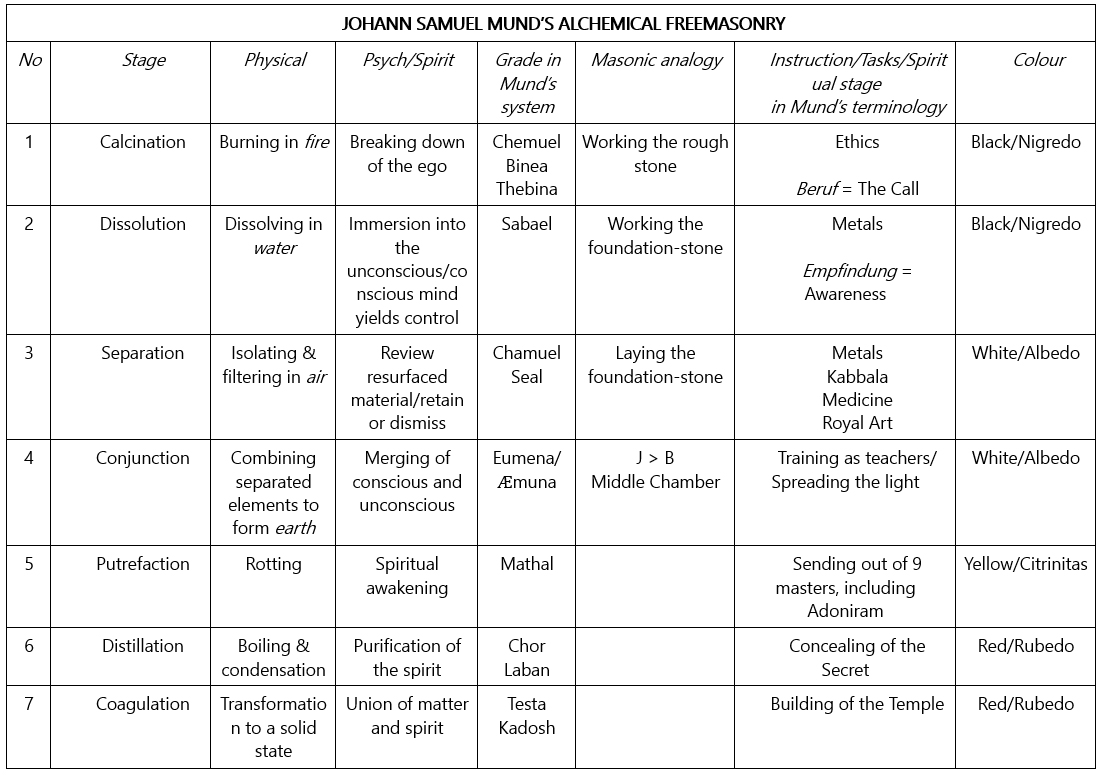 Click Image to Enlarge
It seems remarkable to me, how consistently he follows this path of merging Freemasonry with his alchemical, cabbalistic and Rosicrucian convictions. In his history of the Order, he often orients himself literally to Anderson’s history of Freemasonry, until he finally weaves in the Fama of Christian Rosenkreuz into his history of order, therefore claiming to be in his line of succession
In contrast, the Golden Rosenkreuzer did not focus much on the Fama or the story of C.R.C at all. It did, however, claim to be founded by the same number of Rosicrucian brothers.
Mund presents his own lineage of Rosicrucian succession by incorporating a host of well-known alchemists and Rosicrucians until the line finally ends in Frankfurt with Mund’s admission to the Order.
His attempt to explain the Missio Unico from an alchemical perspective fits perfectly into a description by Ethan Allan Hitchcock: “The genuine Alchemists were religious men, who passed their time in legitimate pursuits, earning an honest subsistence, and in religious contemplations, studying how to realise in themselves the union of the divine and human nature, expressed in man by an enlightened submission to God’s will; and they thought out and published, after a manner of their own, a method of attaining or entering upon this state, as the only rest of the soul”
His alchemical, cabalistic and Rosicrucian writings are always about inner transformation. His central points, which he repeatedly addresses, are the secret of the cave and the lapis philosophum. The secret of the cave is the transformation of the holy fire that the Jews hid in a cave on their way into Babylonian captivity and that was recovered by Nehemiah as watery fire or fiery water. He links the Lapis Philosophorum, the Philosopher’s Stone, with the Cubic Stone of Freemasonry; we also find this idea realised, for example, in the 18th degree of the AASR, when the cube unfolds, and his work teachings and instructions lead deeper into the Kabbalistic interpretations of the degrees. The parts, where Mund describes the work to form the cubic stone or the Lapis philosophorum were some of the highlights of his system for me.
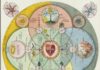
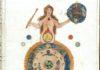
Plates from the Mund System:


It is important for me to mention, that this book was done in a collaboration with my masonic Brother Josef Wages and Paul Ferguson, our translator and an expert in the arcane writings of the past. In the book, we explain more about alchemy and more about the biblical references of his work. More than 900 footnotes provide background information and further context. Many small stories were only hinted at in the footnotes, such as the visit of Baron von Bischoffswerder who wished to acquire Mund’s system for his Order of the Gold and Rosenkreuzer. There was a similar endeavor by the Illuminati and then the discovery of Mund’s bijou in a display case in the Oslo Museum of Freemasonry, labeled as an example for early Russian masonic jewels
When I started to discover the world of Mund, I didn’t know much about Rosicrucianism, although I had been in the Rose Croix degree of the AASR for many years.
In fact, having been brought up as a Roman Catholic and socialized in a roman catholic childhood, I would turn away from organized religion. I developed an inner resistance to spirituality in any form. Or so I thought, only to realize that a basic need of spiritual fulfilment does not disappear by negating it.
–
On behalf of our Pansophers readers, thank you Rolf Kiel for this exciting post. We shall all follow the continued revelations of Mund’s Rosicrucian system keenly.
Readers can order a copy of Rolf’s book on mund from Lewis Masonic.