Who was Prestel? Known as the teacher of Alois Mailander, myth surrounds this person. In a letter, written in 1941, Müller-Edler recollects what Gustav Meyrink told him about Mailänder and Prestel.
Gustav Meyrink said to him:
“I owe him an infinite amount. He knew a wandering, old, enigmatic man, a Rosicrucian, who was a master carpenter called Prestel, who could create magical phantasmagorias etc. Dr Franz Hartmann (1838-1912), who was my classmate, got 9/10 of his “knowledge” from these sources. Prestel owned a bottle with a grey salt. It was the unfinished elixir of life. He always placed it near the warm kitchen stove. One day, in the bottle – my “leader” saw it himself! – there appeared a real, blue snake. Prestel said: I must die. He died too. The elixir remained unfinished. Gustav Meyrink later told me the following about this story: Prestel occasionally said that a Medieval adept had buried a bottle of red powder (!) near the Church Heiligkreuz …”
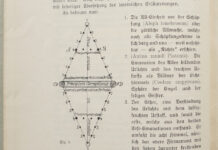
Then Müller-Edler goes on to retell (a bit twisted by the way) the two miracles from the pilgrimmage churches. In fact, one – the blood miracle – happened in Heiligkreuz (Kempten) in summer 1691 and the other one – the snow miracle – happened in winter 1845 in Gschnaidt, Altusried (just north of Kempten). These stories are repeated, almost word by word, by Willy Schrödter in his Rosicrucian Notebook page 132 f.
Franz Hartmann talks about Prestel as early as 1888, in his book Magic Black and White p. 134 f. There he calls Prestel a reputed Rosicrucian and alchemist whom he knew personally, and says he is well acquainted with two of his still living disciples, meaning Alois Mailänder and his brother-in-law Nikolaus Gabele. This is repeated in Lotusblüten 1900, where he claims that those two were taught in their youth by Prestel.
Hartmann says he was an eccentric and mysterious person, able to project images formed in his own mind upon others (“phantasmagoria”). He was not “a full-fledged alchemist and could not make gold and the Elixir of Life, because, as he said, he could not find a woman sufficiently pure, and at the same time willing, to assist him in his labours; for, as it is known to all Alchemists, it requires the co-operation of the male and the female element to accomplish the highest process”.
But he could ennoble metals and Hartmann goes on to tell that he himself is in the possession of a Rosicrucian Cross made of brass, which is over twenty years old (he must have got it before 1865) and still as bright as it was when he first received it.
Schrödter points out that this cross was shown to G. W. Surya, the famed Austrian occultist, astrologer, psychic and alternative healer, in Italy in 1910, and this is confirmed by a letter from Surya to Schrödter from 1942 “ …the Golden Cross owned by Hartmann in which was contained a drop of the true elixir of life, although at the time (1910) when Hartmann showed the cross to me, the liquid had long since dried up. There was just this wonderful aroma as of violets or vanilla which streamed out of the hollow which had been bored in the cross as soon as Hartman took out the screw which closed it.“
Now Karel Weinfurter calls the same person a bother of the Rosy Cross and Alois Mailänder’s initiator who came to him of his own accord and imparted to him the necessary knowledge.
Was this person someone of flesh and blood or just someone Hartmann made up, as claimed by one of our members once? Now Erik Diloo-Heidger has long been preoccupied with the question Prestel and I myself was eager to find out.
Our starting point was a note – scribbled down in a rush – in Wilhelm Hübbe Schleiden’s notebook from approx. 1885: Prestel (farmer) died 1871 in Heiligkreuz was a Rosicrucian. We thought that it must be possible to find his grave at Heiligkreuz or someone of the locals who knew about him.
Erik made his investigations. But there are just such a lot of Prestels in the area, both now and then. I had earlier discovered a carpenter Franz Prestel from around 1845. We could have a look in the Matricula online, in the registers St Lorenz Kempten, we were told by German officials. So we searched for a Franz Prestel who died in 1871. This was quite a job to sift through all those documents written in an almost unreadable handwriting. And no Prestel whatsoever who died in 1871.
But in the end, I found a Franz Joseph Prestel. He died on 11 March 1872, was a master carpenter, a widower, and lived in Leinschwenden no. 19. He was 75 years old at the time of his death and died of “old age”. What was interesting, however, was a note at the very end: ”sect founder. Visited no house of worship for years.” The sect founder is underlined. And this is written by a Catholic priest in a Catholic area, who is obviously quite indignant about a baptized Catholic man who has not bothered to go to church for years.
Bingo. This is our man. That Hübbe-Schleiden had the wrong year of his death is of no concern. After all this was a hasty note. Leinschwenden is just north of the centre of Kempten and quite near the church Heiligkreuz.
We also found his wife’s date of death: “Theresia Prestel, carpenter’s wife, Leinschwenden 19, died 10 December 1862. Was ill for a long time, and since august had not left the house. She was married for 40 years to Jos. Prestel, carpenter.” When I looked up their wedding date, it turned out they were married in 1822, in Heiligkreuz. In this document the date and place of his birth was also mentioned, Franz Joseph Prestel was born 15 april 1797 in Kimratshofen. Kimratshofen is just a stone´s throw away from Gschnaidt, the place where the snow miracle happened.
Next to them, in the house Leinschwenden nr. 20, lived another Prestel family. A Johan Georg Prestel, a farmer, had baptized a son in 1806. They must have been related to each other since they lived to close to each other, side by side. And this might explain why Hübbe-Schleiden called Prestel a farmer, Franz Joseph Prestel was living on a farm! But he was a master carpenter!
When the snow miracle in Gschnaidt from 1845 is described, it is said there were two witnesses to this: a farmer and a craftsman (the German says: ein Bauer, nebst einem Gewerbsmann. Gewerbsmann can mean a person skilled in a special craft according to older dictionaries). They saw a series of inexplicable signs March 1845 there, in the snow, which otherwise showed no trace of human beings. I think it may have been our carpenter Prestel with his relative, farmer Johan Georg Prestel who witnessed this.
Now to the expression “sect-founder.” I am almost convinced that this hints to the Covenant of Promise (Bund der Verheissung) of our Mailänder. Since Prestel is said to have taught Mailänder and Gabele in their youth, Franz Joseph Prestel could have been the one responsible for the beginning of their special meetings, perhaps under another name though. And the Catholic Church was suspicious to anything outside the church, like the Allgäuer Erweckunsbewegung, or Catholics reading Protestant pietist literature, as the Covenant of Promise did. And therefore, called them sects.
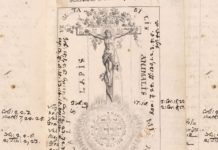
And what about all the literature Mailänder and the “Bund” had from early on? Both pietist and alchemical? It is said that Hartmann acquired his rare copy of the Secret Symbols of the Rosicrucians from Mailänder and his circle. Maybe Mailänder and his circle inherited the master carpenter’s whole library?
And how did the neighbours and inhabitants of the town react to Mailänder’s circle? Hartmann says in The Theosophist, September 1885: “I had heard years ago of these people. I was told that they were strange people and did not go to church. They were said to be very good, but probably very much deluded.” This fits perfectly to the description of Franz Joseph Prestel as a sect-founder who has not visited the church for years!

Pictures: The texts in the two churches describing the miracles; Heiligkreuz and Gschnaidt. Photography by Erik Dilloo-Heidger.

From Franz Joseph Prestel’s death certificate. The priest records this end note. It reads: Sektenstifter (underlined). Besuchte Jahrelang kein Gotteshaus. O.s.m.” Translation: “sect founder. Visited no house of worship for years.”